
 By Olivia Wilson Media Team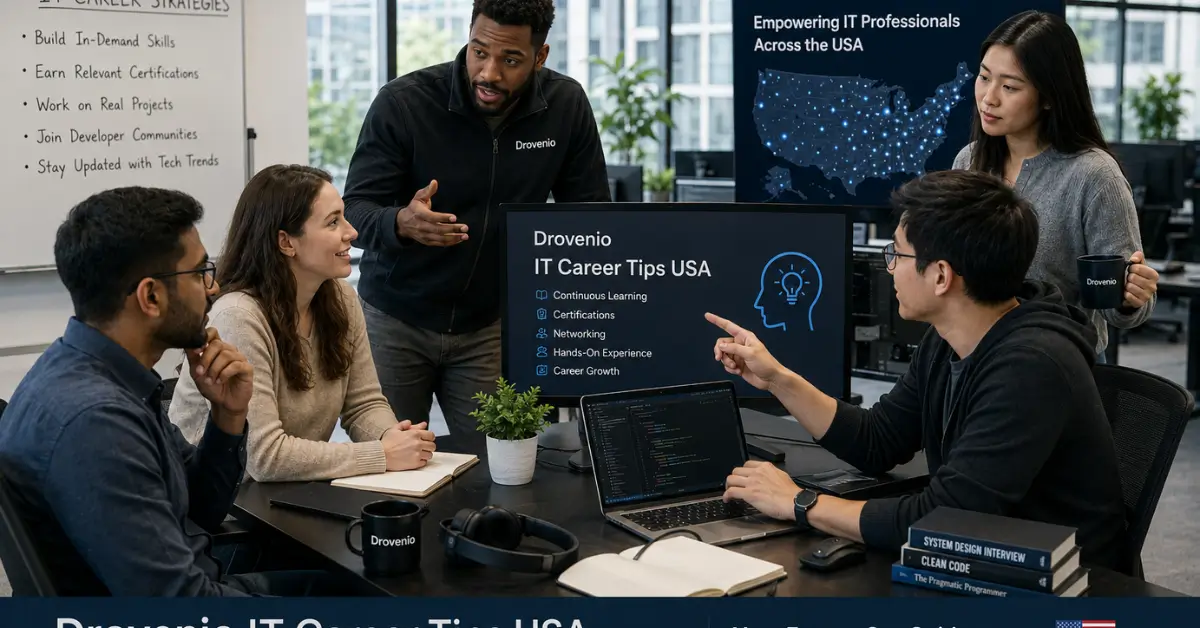
The tech industry in the United States continues to grow at an impressive rate, creating countless opportunities for IT professionals at every level. Whether you’re just starting your journey or looking to advance your existing career, understanding the right strategies can make all the difference. The Drovenio IT career tips USA framework focuses on practical, actionable steps that align with current market demands and employer expectations across North America and beyond.
Many professionals struggle to navigate the complex landscape of tech careers because they lack a structured approach. The difference between those who thrive and those who stagnate often comes down to having the right information at the right time. This comprehensive guide breaks down everything you need to know about building a successful IT career in today’s competitive environment, using proven methods that have helped thousands of professionals achieve their goals.
The foundation of any successful tech career starts with understanding what employers actually want. Companies across the USA, UK, and Canada aren’t just looking for technical skills anymore. They want professionals who can communicate effectively, adapt to changing technologies, and contribute to team success. This shift in hiring priorities means your career development strategy needs to address multiple dimensions simultaneously rather than focusing solely on certifications or coding abilities.
Your technical skills remain the cornerstone of any IT career, but the approach to developing them has evolved significantly. Rather than trying to learn everything at once, successful professionals focus on depth in their core area while maintaining breadth across related technologies. This T-shaped skill development ensures you can specialize while remaining versatile enough to collaborate across different teams and projects.
The Drovenio IT career tips USA methodology emphasizes continuous learning as a non-negotiable habit. Technology changes rapidly, and what was cutting-edge two years ago might be outdated today. Setting aside dedicated time each week for learning new tools, frameworks, or methodologies keeps you relevant and marketable. This doesn’t mean chasing every new trend, but rather strategically selecting technologies that align with your career goals and market demand.
Hands-on experience trumps theoretical knowledge every single time. Employers can tell the difference between someone who completed a tutorial and someone who built actual projects. Create a portfolio that showcases real problem-solving abilities, whether through personal projects, open-source contributions, or freelance work. Each project should demonstrate not just what you built, but why you made specific technical decisions and what challenges you overcame along the way.
The saying that your network is your net worth holds particularly true in the IT industry. Many of the best opportunities never get posted publicly because they’re filled through referrals and professional connections. Building a strong network isn’t about collecting business cards or LinkedIn connections but about creating genuine relationships with people in your field.
Attending tech meetups, conferences, and workshops provides invaluable face-to-face networking opportunities. These events let you meet people who share your interests, learn about emerging trends, and sometimes hear about job openings before they’re advertised. The key is to approach these interactions with authenticity rather than viewing every conversation as a transactional opportunity. People remember and help those who showed genuine interest in them and their work.
Online communities have become equally important for career development. Platforms like GitHub, Stack Overflow, Twitter, and specialized Slack or Discord channels connect you with professionals worldwide. Contributing thoughtfully to discussions, helping others solve problems, and sharing your knowledge establishes your reputation and expertise. This digital presence often leads to unexpected opportunities, from job offers to speaking invitations to collaboration requests.

Your resume and cover letter serve as your first impression with potential employers, yet most professionals don’t invest adequate time in perfecting them. Generic applications that get sent to dozens of companies rarely succeed because they fail to address what each specific employer needs. The Drovenio IT career tips USA approach emphasizes tailoring each application to highlight the exact skills and experiences that match the job requirements.
Modern applicant tracking systems scan resumes for specific keywords and qualifications before any human sees them. This reality means your resume needs to be both ATS-friendly and compelling to human readers. Use clear section headings, include relevant keywords naturally, and quantify your achievements whenever possible. Instead of saying you improved system performance, specify that you reduced load times by forty percent or increased throughput by fifteen thousand requests per second.
Your cover letter shouldn’t simply repeat your resume but should tell the story of why you’re the right person for this specific role. Research the company thoroughly, understand their challenges and goals, and explain how your background positions you to contribute meaningfully. This personalized approach demonstrates initiative and genuine interest, qualities that set you apart from candidates who submit identical applications to every opening.
Technical interviews can be intimidating, but they follow predictable patterns once you understand what interviewers are actually assessing. Beyond checking if you can solve coding problems, they want to see how you think, communicate, and handle uncertainty. Practicing common algorithm and data structure problems builds confidence, but don’t neglect the equally important skills of explaining your reasoning and asking clarifying questions.
The best way to prepare involves consistent practice over time rather than cramming before interviews. Platforms like LeetCode, HackerRank, and CodeSignal offer thousands of practice problems at various difficulty levels. Focus on understanding the underlying patterns and principles rather than memorizing solutions. When you encounter a problem you can’t solve, study multiple solutions to understand different approaches and their tradeoffs.
Behavioral interviews assess cultural fit and soft skills through questions about past experiences and hypothetical situations. Prepare stories that demonstrate leadership, problem-solving, collaboration, and handling failure using the STAR method. These narratives should be concise, specific, and honest, showing how you’ve grown and what you learned from various situations. Companies increasingly value these interpersonal qualities alongside technical abilities, recognizing that great teams need both.
Many talented professionals leave money on the table because they feel uncomfortable negotiating or don’t know their market value. Researching typical compensation for your role, experience level, and location gives you the data needed to negotiate confidently. Resources like Glassdoor, Levels.fyi, and Blind provide crowdsourced salary information that helps you understand what’s reasonable to request.
Timing matters significantly in negotiations. The strongest leverage comes after you receive an offer but before you accept it. Express enthusiasm about the opportunity while professionally stating your compensation expectations based on your research and the value you bring. Remember that total compensation includes not just base salary but also bonuses, equity, benefits, and professional development opportunities. Sometimes companies have more flexibility in these areas than in base salary.
The Drovenio IT career tips USA framework reminds professionals that negotiation is expected and respected in the tech industry. Employers don’t rescind offers because you negotiate professionally. They budget for negotiation and often expect it. Approaching these conversations with specific numbers, clear reasoning, and professional courtesy demonstrates confidence and business acumen that actually strengthens their perception of you.
You don’t always need to change companies to advance your career. Proactively seeking challenging projects, taking on leadership responsibilities, and solving problems outside your immediate job description demonstrates initiative that leads to promotions and raises. Many professionals wait for opportunities to be offered rather than creating them, missing chances to accelerate their growth.
Finding a mentor within your organization provides guidance, advocacy, and insights into navigating company politics and advancement paths. Similarly, mentoring junior team members develops your leadership skills while building goodwill and relationships. These connections create a support network that can advocate for you when promotion discussions happen or new projects need leaders.
Documenting your accomplishments throughout the year makes performance reviews and promotion requests much more effective. Keep a running list of projects completed, problems solved, metrics improved, and recognition received. When it’s time to discuss advancement or compensation, you’ll have concrete evidence of your contributions rather than relying on memory or vague statements about working hard.
The IT field offers incredible diversity in career paths, from software development to cybersecurity, data science to cloud architecture, and countless other specializations. Understanding these different paths helps you make informed decisions about where to focus your learning and what opportunities to pursue. The Drovenio IT career tips USA approach encourages exploring various areas early in your career before specializing.
Individual contributor tracks let you deepen technical expertise without managing people, often leading to roles like principal engineer or distinguished engineer. Management tracks involve leading teams, handling budgets, and making strategic decisions, requiring different skills than pure technical work. Neither path is superior, and choosing between them depends on what energizes you and aligns with your natural strengths.
Emerging fields like artificial intelligence, blockchain, edge computing, and quantum computing offer exciting opportunities for those willing to invest in learning new paradigms. While these areas carry more uncertainty than established fields, they also provide chances to become early experts and shape how industries evolve. Balancing stability with exploration helps you stay current without chasing every trend.
Your professional reputation extends far beyond your current workplace. Contributing to open source projects, writing technical blog posts, speaking at conferences, and maintaining an active presence on professional platforms establishes you as a thought leader. This visibility creates opportunities that wouldn’t come from simply doing your job well, no matter how excellent that work might be.
Consistency matters more than viral moments when building a personal brand. Regularly sharing insights, lessons learned, and useful resources keeps you visible and demonstrates ongoing engagement with your field. You don’t need thousands of followers to benefit from this presence. A smaller audience of engaged professionals in your specific area often provides more value than generic mass following.
The Drovenio IT career tips USA methodology emphasizes authenticity in personal branding. Trying to present a false image of expertise or experience inevitably backfires when people discover the disconnect. Instead, be honest about what you know, what you’re learning, and what challenges you. This authentic approach attracts like-minded professionals and creates more meaningful connections.
The tech industry’s reputation for long hours and burnout isn’t universal, but it’s common enough to warrant serious attention. Sustainable career success requires protecting your physical and mental health through boundaries, time management, and self-care. No promotion or salary increase is worth sacrificing your wellbeing or important relationships.
Setting clear boundaries between work and personal time becomes increasingly important as remote work blurs these lines. Communicate your availability clearly, resist the urge to check email constantly outside work hours, and fully disconnect during vacations. Companies that respect these boundaries create healthier, more productive environments, while those that don’t often experience high turnover and decreased performance.
Investing in hobbies, relationships, and activities outside tech prevents your identity from becoming entirely wrapped up in your career. This balance not only improves quality of life but actually enhances career performance by providing perspective, reducing stress, and preventing burnout. The most successful long-term careers come from treating professional development as a marathon rather than a sprint.
It focuses on practical, real-world strategies for technical and soft skills aligned with job markets in the USA, UK, and Canada.
About 5–10 hours per week of continuous learning is recommended to stay current.
A mix works best: deep expertise in one area plus general knowledge in related fields.
During job offers, performance reviews, or after taking on significantly more responsibility.
Both are essential, skills get you considered, but networking often gets you opportunities.
Building a successful IT career requires more than just technical expertise. The Drovenio IT career tips USA framework demonstrates that combining strong technical foundations with effective networking, strategic job searching, continuous learning, and personal brand development creates sustainable career growth. The tech industry offers incredible opportunities for those willing to invest in both hard and soft skills while maintaining the authenticity and work-life balance that leads to long-term satisfaction.
The strategies outlined here work across experience levels, from those just entering the field to seasoned professionals seeking advancement. Success comes from consistent application of these principles rather than expecting overnight transformation. Start with the areas where you have the most room for improvement, whether that’s technical skills, networking, interview preparation, or salary negotiation.
Remember that career development is a personal journey without a single correct path. Use these Drovenio IT career tips USA as a framework, but adapt them to your specific situation, goals, and values. The most fulfilling careers align technical work with personal interests and values while providing opportunities for growth, impact, and fair compensation. Take action today on at least one area discussed here, and you’ll be moving toward the tech career you deserve.